By Chris Demeter, Sr. Loss Control Representative
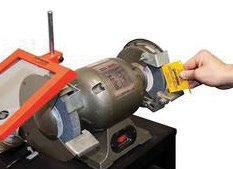
If I inspect a tool & die shop, I would more than likely find at least one bench or pedestal grinder. If you went into my garage, you would find a pedestal grinder that comes in handy when I need to sharpen my lawnmower blades, mine has three. These grinders come in many styles, sizes, and designs. Typical bench and pedestal grinders often have two abrasive wheels, or one abrasive wheel, and one specialpurpose wheel such as a wire brush, a buffing wheel, or a sandstone wheel.
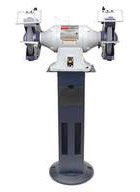
Grinders operate at very high speeds – the wheels often rotate at several thousand RPMs. If a grinding wheel shatters while in use, the fragments can travel more than 300 mph, so there’s a risk for serious injury from flying fragments and the rotating wheel assemblies (including the flange, spindle end, and nut). Abrasive wheels used on bench and pedestal grinders must be equipped with safety guards. The safety guard encloses most of the wheel — covering the flange, spindle end, and nut projection — while allowing maximum exposure of the wheel periphery. The exposed surface of the wheel should not exceed 90 degrees or one-fourth of the periphery.
(more…)