Posts filed under: Compliance

Compliance

By Donna Motley, Vice President of Claims

What is entailed in processing a Workers’ Compensation injury claim? Once the claim form is submitted and set up in our system, it is more than just processing and paying the medical bills. In most cases the injured worker is treating with the employer’s Occupational Clinic. It is the Claims Adjusters’ responsibility to assure the employee is receiving proper treatment, with the appropriate medical personnel; and if necessary, have treatment of the injured worker transferred to a physician specializing in said injury. Orthopedic physicians specialize – back, shoulder, knee, foot, elbow, hands, etc. A mucular condition would be referred to a Physiatrist.
We monitor each and every doctor appointment the employee attends. If an appointment is missed or rescheduled, we want to know why. We follow up for the necessary disability slip the injured is required to submit to their employer.

(more…)

With spring weather finally arriving, many companies are now hiring summer interns or have youth employment. There are some tricky pieces to young employment that are worth sharing with you. First be advised or warned that youth employment rules are strictly enforced. Regulators take great care of providing an extra layer of protection for employees under 18 years old. Let me cover some of the restrictions that apply to employees under 18. The law is clear about occupational duties that are restricted based on age. Employees under the age of 18 are prohibited from working in ANY hazardous or injurious occupation. The regulations then specify some of the items included in their hazardous or injurious tasks: driving, working power equipment, exposure to hazardous substances or chemicals, driving hoisting apparatus such as lift trucks or Bobcats, running any power driven metal forming, punching, or shearing machines, running circular saws or band saws or involvement in any building maintenance such as roofing or painting.

There is a narrow exception of some of the above tasks. The exceptions are permitted in order for students to be enrolled in state approved career or technical education training or apprentice programs. They must be specifically approved and documented.

The Michigan child labor laws also require adult supervision for any employee under 18 years of age. These rules become even more strict if the employee is under the age of 16. The good news for the summer is that the many rules dealing with limited hours during the school year are not a factor. But just a red flag for the rest of the year, the child labor laws are very specific to make sure that the hours are limited and do not infringe upon youth school activities.

At the beginning of this topic I mentioned regulator enforcement is aggressive and punishment for violations is significant and severe. A first violation is imprisonment for one year, and a fine of $2,000. A second violation is a $10,000 fine and 10 years of imprisonment. The Department of Labor takes seriously their role in requiring safe environment for employees under the age of 18.

Even with these restrictions, student interns are a helpful resource and a benefit for both the company and the youth employee. At MTM we use interns to help us with mass mailings, filing, and other office duties. The youth gets to build some experience for their first resume and the company gets some tasks taken care of that are difficult to accomplish during the regular business day. I expect that our member shops have seen the same rewards for both their company and for their kids that are involved.

If you run across a question on this, please do not hesitate to contact us and we can go over it in more detail with you. The law is four pages, single-spaced, we are happy to share that with you for those that are interested. Until next month, I hope you enjoy the spring weather and we will get ready for the warm days just around the corner.

By Ruth Kiefer, Loss Control Manager, MSc, ARM

As our economy is ramping back up, and our facilities are becoming busy again, the decision to hire permanent workers or use temporary workers is a factor that you must debate. When reviewing this decision, you should be aware of MIOSHA’s new initiative regarding temporary workers and what your responsibilities are as an employer.

MiOSHA considers both host employers and staffing agencies are responsible to comply with the workplace health and safety requirements. The key is to ensure that the staffing agency has conducted a general safety and health training to determine what is missing. The host employer is responsible for providing specific training tailored to the particular workplace hazard or equipment operation. The key is communication between both the agency you’re working with and you the host employer to ensure that the necessary training is provided.

(more…)

By Donna Motley, Vice President of Claims

Does your employee know what to do if they sustain a work related injury? Whether your employee is a new hire or has worked at your facility for many years, the procedure is the same. All employees should be briefed upon hire of the steps to be taken should a work injury occur. Employees should be reminded periodically, no less than annually, of proper procedures or any changes in said procedures, should an injury occur. All employees, not just the injured person, play a part in work safety. All employees should be diligent in keeping the work environment clean; clean up or report oil spills, report unsafe practices, report faulty equipment and safety hazards. A co-worker may be a witness to an injury.

(more…)

By Ruth Kiefer, Loss Control Manager, MSc, ARM

As you know one of the nerve-racking issues of keeping up with the MIOSHA safety standards is when a compliance officer comes to visit and puts your safety efforts to the test. Their visits can be spurred by an employee complaint, your industry code being on their strategic plan, or a visit that results from a severe injury. A recent visit in December of 2016, to a manufacturing plant in Ypsilanti, resulted in $265,600 in fines. The MIOSHA inspector found eight serious, six repeat serious, and three other-than-serious safety violations that were noted during the visit. The safety standards that were in violation were the same things that were on our April’s edition of MIOSHA’s top 10 safety violations. The list of standards found in violation included:

(more…)

By Travis Halsted, Loss Control Consultant

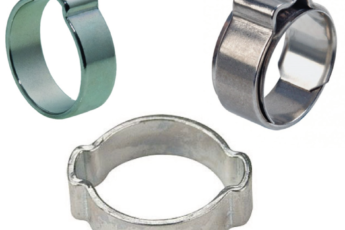
I was recently contacted by one of our customers with a concern that I do not believe many of us think of. This company was concerned whether or not they had the right form of clamp at the tool end of their air hose. This particular company had the worm-drive style hose clamp holding their quick connect air fittings onto the air hose. The worm drive style hose clamp is the clamp that is tightened by using a flat head screw driver or socket to turn a screw that tightens the clamp. This is a common practice among the vast majority of companies that I visit. Upon the correspondence regarding their concerns, the MTMIC Loss Control team spoke of prior MIOSHA inspections and any knowledge of standards regarding hose clamps for air hoses. Through this communication it was found that a prior federal OSHA inspection from 2013 did cite a facility for the wrong type of air hose clamps. In this situation the facility was found to have worm-driven hose clamps that connected their tools to the air hose. The Enforcement Officer found this to be a hazard, as if the hose clamp was to malfunction or loosen, then the employees would be exposed to the whipping action of the air hose. This was cited under the federal OSHA rule 29 CFR 1910.243(b)(2). That rule states that hose and hose connections used for conducting compressed air to utilization equipment shall be designed for the pressure and service to which they are subjected. The company in this particular inspection was cited for $5,500 for 4 instances of this violation.

(more…)

Donna Motley, Vice President of Claims 

Owning and operating a business is multi-faceted. Having Workers’ Compensation insurance, required by law, is one of those many facets. Hopefully, most employers rarely have to utilize their Workers’ Compensation insurance. BUT, should an employee be injured in the course of employment, you, as the employer need to be prepared.

So how far does the employer’s responsibility reach? The employer is responsible for providing a safe working environment, for training employees in the proper way to perform their job, for proper machine and facility maintenance and for properly handling a work related injury, should one occur. An employee injury is costly in many ways. An injured employee is affected professionally and socially. The employer’s production and work product is affected. A work injury has a financial impact on everyone involved. The employer has a vested interest in making the employee be the best he/she can be, as the employer will reap the rewards.

Don’t ignore the signs. If a Supervisor walks past a work station and notices an employee stretching their back, rubbing their shoulder or playing “windmill” with their arms, that should be the employers first clue that something may not be right. Ignoring “signs” rarely benefits the employer. It is doubtful the situation will resolve itself or just “go away”. On the contrary, what usually happens is the employee will start treating with their primary care physician for the medical condition. Then when it starts to cost the employee a lot of money, or the condition does not resolve, or someone tells them they should file a Workers’ Compensation claim, the employee will bring the situation to the attention of the employer. By this time, treatment has been rendered and we would have to obtain all those medical records; suspicion overshadows the entire claim because it is being reported so late and after the employee has received treatment; and we will not allow treatment until the matter has been investigated. This delay in treatment will in turn delay the employee’s recovery and impact work product and production.

While we are not suggesting that a Supervisor “suggest” to an employee that the employee has a work injury, a simple “Is everything o.k.? I noticed you rubbing your shoulder” can go a long way. At that point the employee may admit that he has an injury that occurred outside of work (make note in the personnel file if that is the case); the employee may alert the employer to a machine set up or situation that could maybe be changed to be more ergonomic; and the employee may come away feeling their employer “cares”.

If the employee advises that something he did at work has caused an injury, the employee should be immediately sent to the clinic. Remember, it is not up to the employee to decide whether or not they “want” to go to the clinic if they have reported a work injury. Whether the employee alleges nothing is wrong, an injury occurred outside of work (i.e. they just slept wrong) or there was a work incident, the Supervisor should follow up with the employee later that day, the next day and the next week, and ask if everything is o.k. or if they are having any other issues. Again, ignoring these situations do not make them go away – instead, they tend to “fester”.

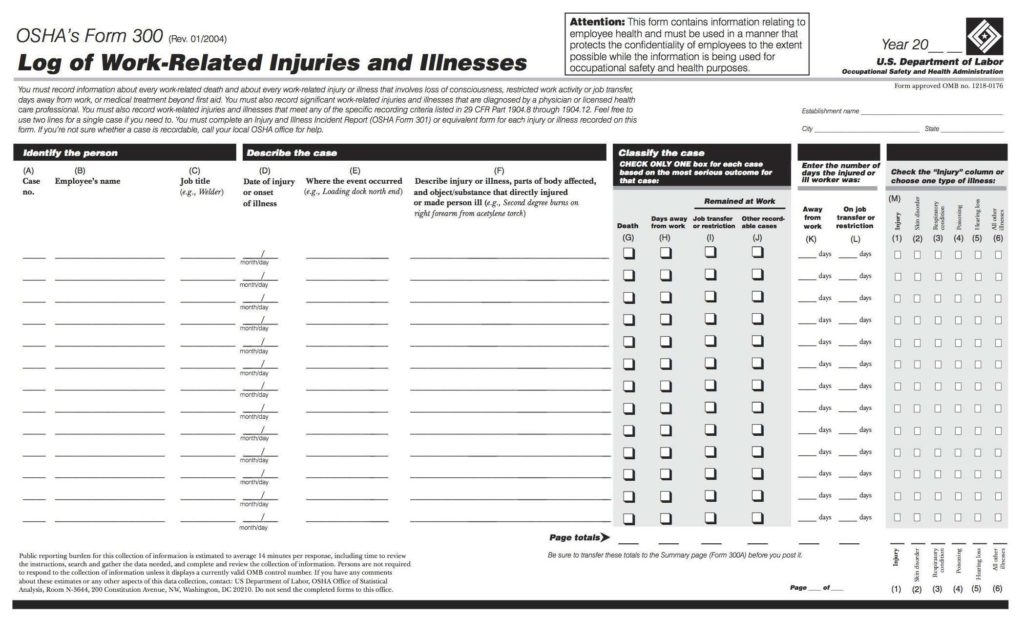
As an employer, you should review all employee injuries, your injury logs and/or loss runs to determine how many and what kind of injuries are occurring and where they occur. Then review to see if there are any changes that could be made so injuries do not continue. Your Loss Control Consultant can be a tremendous help in this regard. Remember, we are a team, all working toward the same goal – a safe and productive work environment! We all benefit!

Audit Reviews

Large audit additional premium due – scary words. Each workers’ compensation policy is written with estimated payrolls for the upcoming year. When the policy expires, an audit is completed to get actual payroll. We then calculate the actual premium from the audit payroll, and subtract member payments during the year. The end result is that we have an audit additional due from our member or premium refund due back to our member. More than 97% of the time, this system works out well. The estimated payroll is close to actual and we end up with a small additional premium that is no burden to our member, or we end up with a small return where MTMIC sends a check back to our member. This high success rate does not mean that the other 3% goes easy. The large additional audit dollars affects the budget and causes stress to our member. It also causes discomfort at MTMIC. We do not like to do things that aggravate our members. Remember, most of our members have been with us for years, and that personal relationship and trust is greatly valued by our member and by the MTMIC staff.

(more…)

By Chris Demeter, Senior Loss Control Consultant

I have been with MTM for over 13 years, and prior to that I was the Safety Director at a prototype sheet metal stamping manufacturer. Every 18-months or so, I would get a visit from MIOSHA. It was not because we had a great deal of injuries, it was because we were considered a “High-hazard industry”.

Every year, MIOSHA targets certain industries that shows a higher than normal injury rate. Their main goal is to “improved workplace safety and health for all workers, as evidenced by fewer hazards, reduced exposures, and fewer injuries, illnesses and fatalities”.

(more…)

By Donna Motley, Vice President of Claims

An injury occurs at your facility. The incident is reported through the proper channels – this could be a report to the immediate Supervisor, Plant Manager, Safety Director, or Human Resource Department. If immediate medical attention is required (i.e. blood is involved, a head injury, EMS needs to be called) the next step would be to make sure the injured employee receives the proper medical attention. Then, notify the MTMIC Claims Department of the incident – even if notification is without benefit of the Form 100 (Employer’s Basic Report of Injury). In an emergent situation, you may not know all the facts at that point in time, but should medical personnel contact our department for some sort of verification or authorization, we would at least be aware of the situation and able to take appropriate measures to manage the pending claim. Following said notification, the employer should then start their investigation as to the facts and circumstances surrounding the incident. If a serious injury has occurred, the Claims Department will also notify your MTMIC Loss Control Consultant, who will contact you and aid in an investigation and/or schedule to do an investigation on our behalf.

(more…)

By Ruth Kiefer, MSc, ARM Loss Control Manager , MSc, ARM, MiOSHA Level 1 Certified 

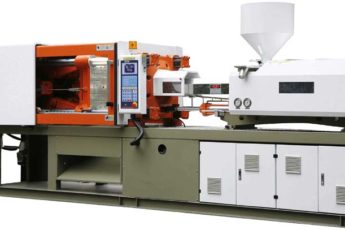
Effective January 1, 2017: Plastic Injection Mold Industry:Die Change Procedures for Horizontal Injection Mold Machines

s many of you in the plastic injection mold industry know, there will be a MIOSHA rule change in the standard pertaining to injection mold machines that takes effect on January 1, 2017. I have received various responses to this change, for most of you, you are already adhering to the ruling so its no big deal. For other manufacturers, this change has brought up a few questions in recent months, so to help you get ready for the rule change, here are some of the questions that have been posed to our department and to MIOSHA.

(more…)

By Patty Allen, Sales & Marketing Assistant

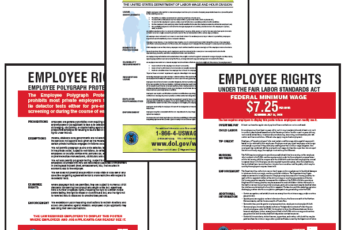
The Department of Labor revised the Fair Labor Standards Act (FLSA) and Employee Polygraph Protection ACT (EPPA) effective August 1st.

Those revisions were mailed out to each of our companies to post over your existing Federal Labor Law Poster. New Michigan and Federal Labor Law posters will be reprinted in December to include all 2016 updates.

If for some reason you did not receive your updated postings; please contact Patty Allen @ 248-715-0013 or patricia.allen@mtmic.com/blog to request additional copies.

By Glenda Moyle, Premium Accounting Manager

Recently I have been contacted regarding our payroll auditors. I am pleased to say that like the stability of the rest of MTMIC services, our auditors have been the same for over 20 years. Our auditors are from The Aprise Group. We recently have been notified by some of our members that there is a company called “CCS” that has been contacting our members concerning WC payroll audits. This company is NOT related to MTMIC or The Aprise Group. Of course, please call me with any questions.

By Travis Halsted, Loss Control Consultant

A vast majority of facilities that I visit each year have a welding operation present. Whether it be a large welding area with a plethora of welding cells or a smaller one table welding work station, there are a great deal of potential hazards present whenever welding operations are being completed. This is evident by the $119,803 MTMIC has spent on claims since 2009 that were traced back to welding operations. Of the 82 injuries reported, the injuries range from burns, strains, foreign bodies, inflammation, lacerations, and punctures. As there are a great deal of factors that go into these injuries, one particular item can often be found to be a root cause. In many cases, the lack of proper personal protective equipment was found to play a large role.

(more…)

By Donna Motley, Vice President of Claims

Recently there have been several stories on local News stations claiming the “injustice” of our current Workers’ Compensation system. Allegations have been made by a well known, local plaintiff attorney, that part of the medical profession conspires with the insurance companies to “deny” Workers’ Compensation claims. And that the doctors are making thousands and thousands of dollars by doing so. It just so happens, this plaintiff attorney, who attends local Union meetings soliciting business, once filed a RICO (Racketeer Influenced and Corrupt Organizations Act) suit against us, as well as against our insured (employer/owner), claims adjuster and medical evaluation doctor. We tried the case in the Workers’ Compensation courts AND WON. We also WON on Appeal. We WON in civil court which was appealed to the Supreme Court who denied the appeal as well. Since the case against us, this attorney continues to file similar cases against other carriers and besmirch insurance companies/carriers and all connected with defending these claims.

(more…)

By Donna Motley, Vice President of Claims

What is meant by “late reporting”? Typically, we like to receive notice of injuries (via the Form 100 – Employers Basic Report of Injury) within a week of the occurrence. The earlier a report is submitted, the earlier we can set the claim up in our system. Then, if there are telephone calls regarding medical treatment, we will at least have the basic information. The “basic” information required to set up a claim is the employee’s name, address, social security number and date of birth. Obviously, we need to know the type of injury and body part involved. We also require the employee’s date of hire, occupation and the date the employer was notified of the injury. These are mandatory fields to obtain a claim number. You can submit an injury report without knowing the current medical status, treatment plan or whether or not the employee will be losing time from work. We can obtain that information once the claim has been established.

(more…)

By Glenda Moyle, Premium Accounting Manager

This is just a reminder to all of our Policyholders that our audit company, The Aprise Group, will be doing the final audits again this year. They have been our audit company for the past 25 years. Once your policy expires, they will be contacting you within 30 days to set up an appointment to do the audit. If you have any questions, please contact me at glenda.moyle@mtmic.com/blog. Thank you for being a member of the MTMIC.

By Ruth Kiefer, MSc, ARM, Loss Control Manager

Many of our manufactures and policyholders may or may not know we also have been servicing the printing industry for a few years now. During this time I have been asked on numerous occasions what does MIOSHA compliance look for in our industry? During one of our recent training events with MIOSHA, I had the opportunity to inquire about which standards MIOSHA refers to when they conduct a compliance visit in a Printing facility.

paint-cansHaving seen most of our workers’ compensation injuries related to inadequate LOTO (Lockout Tagout) procedures and where the majority of our members have the most questions; I directed our conversation to the LOTO requirements and what they are looking for. What I found out was in the 1990’s OSHA and ANSI came together as a board to interpret and clarify what actually applies to the printing industry, since there are a variety of printing presses with different technologies, and most of them spanning many years.

(more…)

The State and Federal Labor Law Posters should be arriving in your mail at the end of the month so be watching for them!

By Donna Motley, Vice President of Claims

I’ve written in the past about Fraud in Workers’ Compensation. Types of Insurance Fraud include: Welfare, Unemployment, Mortgage, Automobile, Healthcare, Medicaid, etc.

This year we had our tri-annual State Audit and one of the questions they asked was how we handle fraud. We would first have to define “fraud”. Webster’s dictionary defines fraud as: “intentional perversion of truth in order to induce another to part with something of value or to surrender a legal right”. Per the Insurance Institute of Michigan website, an example of (insurance) fraud (pertaining to Workers’ Compensation) is: exaggerating the extent of a minor injury to collect (W/C) benefits; billing insurance companies for medical services that were not rendered. I think we can take it further. What about alleging a work injury when the injury really occurred outside of work? Or what about the person who alleges their medication was “stolen” and they need another re-fill when the reality is that either they are addicted to the drug or they are selling the pills on the street? What about the person who claims they need “in home assistance” because they are too incapacitated to even make themselves a sandwich? Or how about the person that won’t let the Nurse Case Manager in the examining room so they can tell the doctor how heavy or repetitive their job is, or their pain level is a 14 on a scale of 1 to 10?

(more…)